AI Solves It, Humans Can’t Understand It: A New Frontier of Knowledge

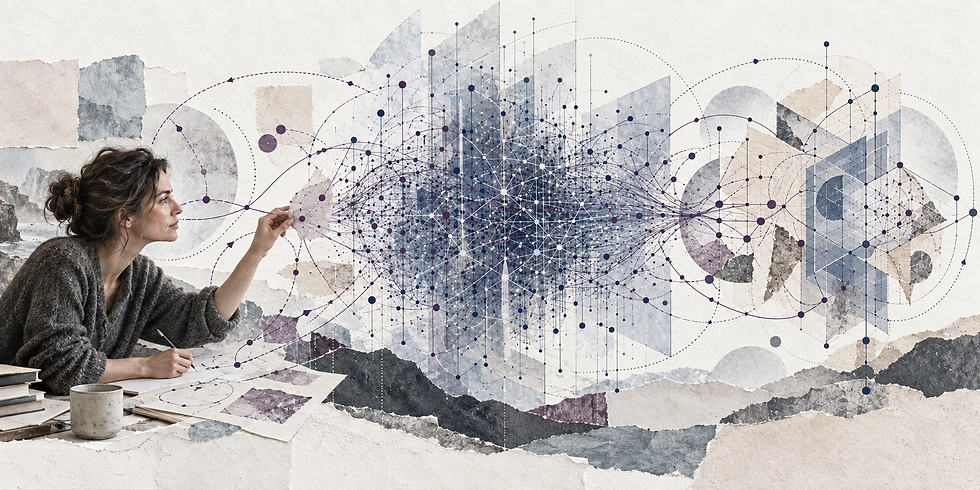
We are gradually getting used to artificial intelligence working faster than humans, processing more information, and producing better results in certain domains. Much of the discussion so far has revolved around this growing capability: how accurate the models are, what tasks they can perform, which professions they may transform, and where human involvement will continue to matter.
But the capabilities artificial intelligence is beginning to demonstrate in scientific research open the door to a more fundamental discussion. There is an important difference between a system solving a problem that humans have been unable to solve and humans no longer being able to understand the solution that system has produced.
That distinction is what I want to explore here. The starting point is the Navier–Stokes example discussed by Azeem Azhar in Exponential View. But the issue extends far beyond mathematics. As artificial intelligence begins to produce results that exceed our capacity to evaluate them, we may have to reconsider what knowledge means, what meaningful human oversight actually requires, and where humans belong in human–AI collaboration.
Until now, we have often treated three different stages as if they naturally followed from one another: a result being correct, being able to independently verify that result, and understanding how that result was reached.
The first concerns the result itself. An artificial intelligence system may arrive at the correct answer to a problem. The second concerns our relationship with that result. We may be able to check, through methods independent of the system that produced it, whether the answer is indeed correct. The third takes place at a different level. We do not simply establish that the result is correct; we understand the steps that produced it, the relationships between those steps, and why this answer, rather than another, is the right one.
With relatively simple systems, these three stages can remain close together. Artificial intelligence performs a calculation, a human checks it, and the human can understand how it was done. But as the solutions produced by these systems exceed the scale humans can reasonably follow, that connection begins to weaken. We may have strong evidence that a result is correct. We may even use other systems to verify it. And yet no human may be able to fully grasp the structure of reasoning that led to it.
This is what makes the Navier–Stokes example interesting. It is not simply that artificial intelligence may be capable of solving an extraordinarily difficult problem. It is the possibility of an increasingly large distance opening up between a correct result and human understanding.
As that distance grows, the artificial intelligence debate changes with it. The issue is no longer simply whether machines can solve problems better than humans. It becomes a question of how we work with results that we accept as correct without fully understanding them.
What do we gain when a problem is solved?
According to OpenAI’s announcement published on September 8, 2026, the company deployed roughly 10,000 concurrent artificial intelligence agents, powered by a model that had not yet been publicly released, to work on the Navier–Stokes problem. The system exchanged 2.7 million messages and generated approximately 130 billion output tokens, reaching a solution in about 88 hours. A further 17 hours were spent on formal verification in Lean using GPT-6 Astra.
At first glance, this looks like a familiar story of artificial intelligence progress: more powerful models, greater computational capacity, and eventually a solution to an extraordinarily difficult problem that humans have been working on for a long time.
But the most significant development is not simply that a solution was found.
In his assessment in Exponential View, Azeem Azhar draws attention to the possibility that the resulting proof may be too complex for a human being to fully inspect and understand. That possibility puts us in unfamiliar territory.
The problem may technically have been solved. The correctness of the result may be tested through formal methods. Yet if no human can comprehend the solution in its entirety, what has emerged is not simply a new mathematical result. It is a new situation in which the connection between producing knowledge and humans understanding that knowledge begins to weaken. Science is not simply the accumulation of correct answers
Human beings have never been merely the recipients of results in the production of scientific knowledge.
When a mathematician produces a proof, other mathematicians examine it, challenge it, reconstruct it, simplify it, and eventually carry the methods contained within it into other problems. Solving a problem does not simply mean that it is no longer an open question. The solution itself can generate new methods, new connections, and new ways of thinking.
Scientific progress, therefore, is not simply the accumulation of correct answers. Expanding human understanding of why those answers are correct is part of that progress as well.
This is why Terence Tao’s assessment in the context of this discussion matters. Artificial intelligence technically solving a major open problem and that solution producing new mathematical understanding are not necessarily the same achievement. A solution that humans cannot follow may technically close a problem, while extracting the new methods, relationships, and ideas contained within it and making them intelligible to mathematicians is an entirely different process.
The distinction may appear subtle, but it could become increasingly important in the age of artificial intelligence. There may no longer be an automatic transition between a system arriving at the correct result and that result becoming part of human knowledge.
Solving a problem is not simply about reaching the correct answer. A solution also produces insight into how the problem itself should be understood. It may reveal methods that can be applied elsewhere, relationships that were previously invisible, and new questions worth asking. Sometimes a significant part of the scientific value lies not in the answer itself, but in the structure discovered on the way to it. This is why the most important knowledge sometimes lies not in the answer, but in understanding why we arrived at that answer.
Knowledge beyond human understanding
Navier–Stokes is only a striking example. The same distinction could have much more immediate consequences in other fields.
An artificial intelligence system might discover a new drug molecule while researchers remain unable to fully explain why it works. A system might evaluate millions of economic variables and determine that a particular policy is likely to produce the best outcome, while economists cannot follow the chain of reasoning that led to that conclusion. Another system might reach an exceptionally accurate conclusion in a legal case while the lawyer remains unable to fully inspect the reasoning behind the decision.
A similar distinction can emerge in language. A model may produce an exceptionally successful translation. But if we cannot evaluate why it interpreted a particular cultural reference in a certain way, what loss of meaning it accepted in doing so, or which alternatives it rejected, we begin to judge only the quality of the final text.
The consequences and risks in these examples are clearly different. But they share the same underlying condition: a distance begins to emerge between using a result produced by a system and possessing knowledge about that result.
As artificial intelligence develops, that distance may widen. We may encounter domains of knowledge that humanity accepts as correct, uses in practice, and even builds other systems upon, while no individual human can fully comprehend them.
In such a world, humans may gradually move away from the centre of the knowledge-production process while continuing to use its results. A new layer emerges between the systems producing knowledge and the people using it. We may increasingly act without always knowing the “why,” relying instead on the reliability of the system, verification mechanisms, and checks performed by other systems.
This is not simply a change in what artificial intelligence can do. It is a change in the relationship between humans and knowledge itself.
The limits of “artificial intelligence produces, humans evaluate”
One of the most common ways of describing human–AI collaboration is relatively simple:
Artificial intelligence produces, humans evaluate.
The distinction matters. The fact that artificial intelligence can produce an output does not mean that the output is correct, reliable, contextually appropriate, or worth using. This is precisely where human judgment remains essential.
But the Navier–Stokes example pushes this model one step further. Once the productive capacity of artificial intelligence exceeds the evaluative capacity of humans, simply keeping a human somewhere in the process will no longer be enough.
When outputs become too large to read, too complex to trace, or dependent on more connections than a single human mind can reasonably comprehend, the idea of “human in the loop” begins to change. Because having a human in the loop is not the same as giving that human meaningful oversight.
If a person approves an output at the end of a process but cannot meaningfully evaluate how the system reached its conclusion, that does not amount to meaningful human oversight. The human is present, but not in a position to genuinely challenge the epistemic basis of the decision.
This distinction matters because we often equate human oversight with the mere presence of a person somewhere in the process. Meaningful oversight, however, requires access to enough information, explanation, and evaluative capacity to challenge a system’s conclusion when necessary.
As artificial intelligence systems begin to exceed human evaluative capacity, part of that work may inevitably be delegated to other artificial intelligence systems. One model produces an output. Other models check it. Additional systems search for inconsistencies. Humans then move away from inspecting every individual output and toward overseeing how these evaluation systems are designed, which criteria they use, and the boundaries within which they operate. The human role does not disappear. But its position changes.
A new place for human judgment
This shift also requires us to broaden how we define the quality of an artificial intelligence output.
Today, when evaluating an artificial intelligence output, we often look at criteria such as accuracy, consistency, use of sources, contextual appropriateness, and potential bias. With more powerful systems, these may need to be joined by other criteria: traceability, verifiability, explainability, and human comprehensibility.
The human task is not to calculate faster than artificial intelligence or to possess more information than the system. The value of human judgment lies elsewhere.
Humans determine which questions should be asked, what counts as sufficient evidence, which risks are acceptable, and in which contexts a result may be used. In some domains, humans must also set the boundary beyond which a result should not be used, however likely it is to be correct, if it cannot be explained or independently verified.
For this reason, thinking of human oversight as a final check is becoming increasingly inadequate. Human oversight has to be embedded throughout the structure, from deciding why a system is being built to defining the criteria by which its outputs will be evaluated.
Perhaps we will eventually need to stop defining the human role in human–AI collaboration as “the person who performs the final check.” Humans may increasingly become the ones who define the conditions of evaluation.
This is not a minor shift. It relocates human authority away from the assumption that we must “know more than artificial intelligence” and toward our ability to determine under which conditions knowledge can be considered reliable and usable.
Thinking about the future of human–AI collaboration solely in terms of artificial intelligence producing more answers, and producing them more accurately, is therefore incomplete. As we work with systems whose capabilities increasingly exceed our own, the central challenge will be preserving our ability to maintain a meaningful, critical, and accountable relationship with their outputs.
Artificial intelligence solving problems that humans cannot solve may represent a major scientific threshold. But alongside it, another threshold is emerging: how humans preserve meaningful oversight when faced with solutions they can no longer fully understand.
References
Azhar, A. (2026, September 13). Look up, the curve turned #601: On the economy, Navier–Stokes & safety. Exponential View.
OpenAI. (2026, September 8). On the Navier–Stokes Millennium Prize Problem. OpenAI.
Tao, T. (2026). Commentary on the Navier–Stokes problem, AI-assisted mathematical research, and human-comprehensible mathematical proof.
Clay Mathematics Institute. Navier–Stokes Equation: Millennium Prize Problems.


Comments